自动化制氢的两种方式
电解槽有两种自动化方式:集中式和分散式结构。 两者都追求安全、高效制氢, 区别只在于装置的设计和控制。
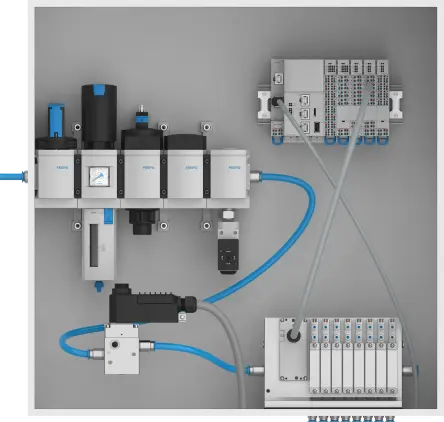
集中式自动化
集中式自动化通过中央控制柜进行控制。 所有传感器、执行机构和阀通过电缆连接在一起,由中央控制系统进行操作和控制。 这样不但能让结构条理分明、一目了然,而且便于维护——在空间有限的情况下,这种解决方案可以节省空间。
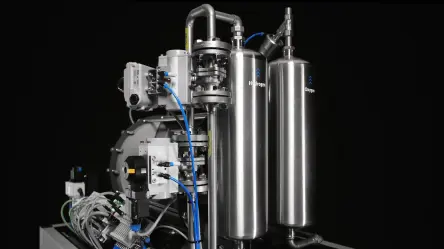
分散式自动化
采用分散式方案时,智能自动化部件直接安装在各个流程中。 因此,装置的控制系统分布在多个模块或单元上—— 可以是不同装置中的阀岛或 I/O 模块。 这样不但能节省控制柜空间、减少布线工作量,还可轻松完成装置的模块化扩展。
集中式、分散式或者兼而有之?
完全取决于框架条件。 集中式解决方案通常是紧凑型电解槽的明智选择。 而对于配备组合式模块的大型装置来说,分散式往往更为合适。 当然,您也可以将这两种方案组合使用。 为何不利用两种架构的优势,将您的个性化想法落到实处?
Are decentralised systems too complex?
Many people think that decentralised automation is difficult to manage. However, modern systems are easy and intuitive to configure. This simplifies commissioning and ensures that system operation is stable, without any unnecessary interruptions.
Decision-making made easy
Festo will help you find the right control concept for your requirements. The focus is always on what solution is the best, regardless of the technology used. This means that the decision depends on your system and your requirements. What is certain, is that Festo offers everything from a single source, from components to the control cabinet.
Already successfully being used now
Our customers successfully use centralised and decentralised automation solutions to produce hydrogen. This not only reduces costs, but also increases the efficiency and safety of the processes, thus makinga real contribution to decarbonisation. Make the most of our experience.
Checklist: Which concept suits you?
☑ Is your system compact or distributed?
☑ Will you need to be able to scale it flexibly in the future?
☑ How much space is available for control technology?
☑ Would you like to reduce cabling and installation work?
☑ Is a combination of centralised and decentralised solutions an option?